Your Customers Are Already Searching with AI. The Question Is Whether They're Finding You.

AI Overviews now appear in 60% of US queries. That's not a projection. That's not "coming soon." That's now.
The shift from keyword matching to AI synthesis has redrawn the entire search visibility landscape. And if your strategy hasn't changed, you're invisible to the majority of your customers at the exact moment they're looking for you.
The new search reality
For 20 years, Google rankings meant visibility. Your ranking position correlated directly to clicks. Page one meant traffic. This equation is broken.
AI Overviews are slowly but surely starting to target lower-funnel searches (https://www.semrush.com/blog/semrush-ai-overviews-study/), with the percentage of keywords triggering an AI Overview with commercial, transactional, or navigational intent all growing since October 2024. This isn't just informational queries anymore. This is where customers are making buying decisions.
The problem: in eCommerce alone, 16% of searches now trigger AI Overviews, yet 80% of the sources cited don't rank organically, and even holding a top-three position gives you just an 8% chance of being featured (https://www.sellerscommerce.com/blog/ai-overview-statistics/).
You could be in Google's top position and still be invisible to 92% of the people searching your market.
The conversion truth
Here's where the narrative shifts from panic to opportunity.
AI Search traffic converts at 14.2% compared to Google's 2.8% (https://www.onely.com/blog/how-ai-search-works/). That's a 5x difference.
Let's be concrete about what this means. If you're running traditional organic search and you send 1,000 visitors to your site, you get roughly 28 conversions. The same 1,000 AI visitors? 142 conversions.
Across a dataset of 312 B2B technology firms, AI visitors converted at an average rate of 14.2%, while Google's organic traffic conversion rate was 2.8% (https://opollo.com/blog/the-2026-ai-search-benchmark-report/), meaning AI-driven visitors converted at 4–5 times the rate of traditional search traffic.
This isn't a volume play. This is a quality play. And quality is worth exponentially more than volume.
Why AI Traffic Converts Harder
The behavioral psychology is straightforward: AI search users arrive with different intent — they've already researched, compared alternatives and refined their requirements through conversation with an AI assistant (https://www.rankscience.com/blog/ai-search-vs-google-traffic-data).
Think about how someone uses ChatGPT or Claude. They don't search once. They ask clarifying questions. They compare options. They talk through their needs with the AI. By the time they click to your site, they're not in awareness stage. They're in evaluation or decision stage.
They're pre-qualified.
Across 350+ businesses, AI-sourced customers generate 158% more referrals and have 73% lower cancellation rates (https://superprompt.com/blog/ai-search-traffic-conversion-rates-5x-higher-than-google-2025-data). That's not just a conversion number. That's a customer quality metric that changes your unit economics.
What has to change in your strategy
The old framework doesn't apply:
Old playbook: Optimize for keywords → Rank higher → Get more clicks → Some clicks convert
New playbook: Get cited by AI systems → Reach pre-qualified users → Higher conversion rates → Fewer clicks matter more
Three immediate shifts
1. You need visibility metrics that don't exist in traditional SEO tools.
When prospects research your category using Google AI Overviews, the conversion happens before they ever click through to your site. The problem is not losing traffic — the problem is losing the ability to measure it.
You need to track citation rate (how often AI systems mention your brand or content), not just keyword rankings. You need to measure AI-sourced pipeline attribution, not just organic CTR.
2. Content format matters differently now.
Listicles are the preferred format for AI citations, sitting at a 25% citation rate compared to blogs and opinion pieces at 11% citation rate (https://exposureninja.com/blog/ai-search-statistics/). AI Overviews rely heavily on list-based formatting, with 78% of responses featuring either ordered or unordered lists (https://www.sellerscommerce.com/blog/ai-overview-statistics/).
This doesn't mean everything is a listicle. It means structured, scannable content gets cited more often. It means clear hierarchy and data presentation win.
3. Schema markup and freshness matter more.
Source citation improves by 30% when schema markup is included (https://exposureninja.com/blog/ai-search-statistics/). AI platforms tend to cite content that is 25.7% "fresher" (posted or updated within 1,064 days compared to 1,432 days for traditional search) (https://exposureninja.com/blog/ai-search-statistics/).
Implement schema markup. Keep content updated. Not for vanity. For visibility.
The timeline question
According to the latest dataset from Advanced Web Ranking, Google AI Overviews now appear in 60.32% of U.S. queries, doubling their presence since August 2024 (https://xponent21.com/insights/google-ai-overviews-surpass-60-percent/).
This expansion is accelerating, not slowing.
The brands getting ahead now aren't waiting for the strategy to mature. They're optimizing for AI citation alongside traditional SEO. They're measuring things traditional tools can't measure. They're treating this as infrastructure, not trend.
Your competitors are probably not doing this yet. That window is finite.
The real question
The question at the top of this post wasn't rhetorical. Your customers are searching with AI. They're reading AI summaries. They're making decisions based on what AI recommends.
The question is: Are you in those summaries?
If you don't know, that's the first problem to solve.
Next Steps
- Audit your AI visibility. What percentage of AI Overviews in your category include your brand or content? Most brands haven't even checked.
- Identify your citation opportunities. Which content types (listicles, comparison tables, expert panels) are getting cited most in your industry?
- Map AI traffic to outcomes. Set up GA4 segments for AI referral traffic. Track conversion rates. Connect it to revenue, not just clicks.
- Start optimizing for citation, not just ranking. Schema markup, freshness, listicle formats, brand presence in AI-friendly content.
The 60% number is the new normal. The question is whether you're moving toward visibility or away from it.
FAQ
What percentage of searches now show AI Overviews?
According to Advanced Web Ranking data from November 2025, Google AI Overviews now appear in 60.32% of U.S. queries. This represents a doubling from August 2024 when they appeared in approximately 30% of searches. The expansion is accelerating as Google rolls out AI Overviews to more query types, including commercial and transactional keywords.
Why does AI search traffic convert higher than traditional Google search?
AI search users arrive with greater intent because they've already conducted research and refined their requirements through conversational interaction with AI assistants. By the time they click to a website, they're pre-qualified and typically in the evaluation or decision stage rather than awareness stage. This higher-intent traffic also has better long-term customer metrics — AI-sourced customers generate 158% more referrals and have 73% lower cancellation rates compared to traditional organic search visitors.
What's the conversion rate difference between AI and traditional search?
AI search traffic converts at 14.2% compared to Google's 2.8% — a 5x multiplier. Across a dataset of 312 B2B technology firms, AI visitors consistently showed 4-5x conversion rates relative to traditional organic search. This means the quality of visitors from AI systems is significantly higher, even if volume is lower. One ChatGPT referral study showed 12,832 visits generating 127% more orders and $66,400 in direct revenue.
How can I improve my visibility in AI Overviews?
Focus on three key areas: (1) Implement schema markup — source citation improves by 30% with proper schema implementation. (2) Keep content fresh — AI systems cite content updated within 1,064 days at 25.7% higher rates than older content. (3) Use listicle and structured formats — 78% of AI Overviews use list-based formatting, and listicles receive 25% citation rates vs 11% for opinion pieces. Additionally, track which content types are cited most in your industry and optimize your content strategy around those formats.
What does AI citation mean versus traditional Google rankings?
Traditional Google rankings show position in search results and correlate with click-through rates. AI citation means your brand or content is referenced in the AI Overview summary that appears at the top of search results. These are different visibility metrics — you can rank top 3 on Google but have an 8% chance of being cited in an AI Overview in eCommerce categories. AI citation often happens before users click to your site, meaning conversions can occur without traditional traffic attribution. You need dedicated measurement infrastructure to track citation rate and AI-sourced pipeline separately from traditional SEO metrics.
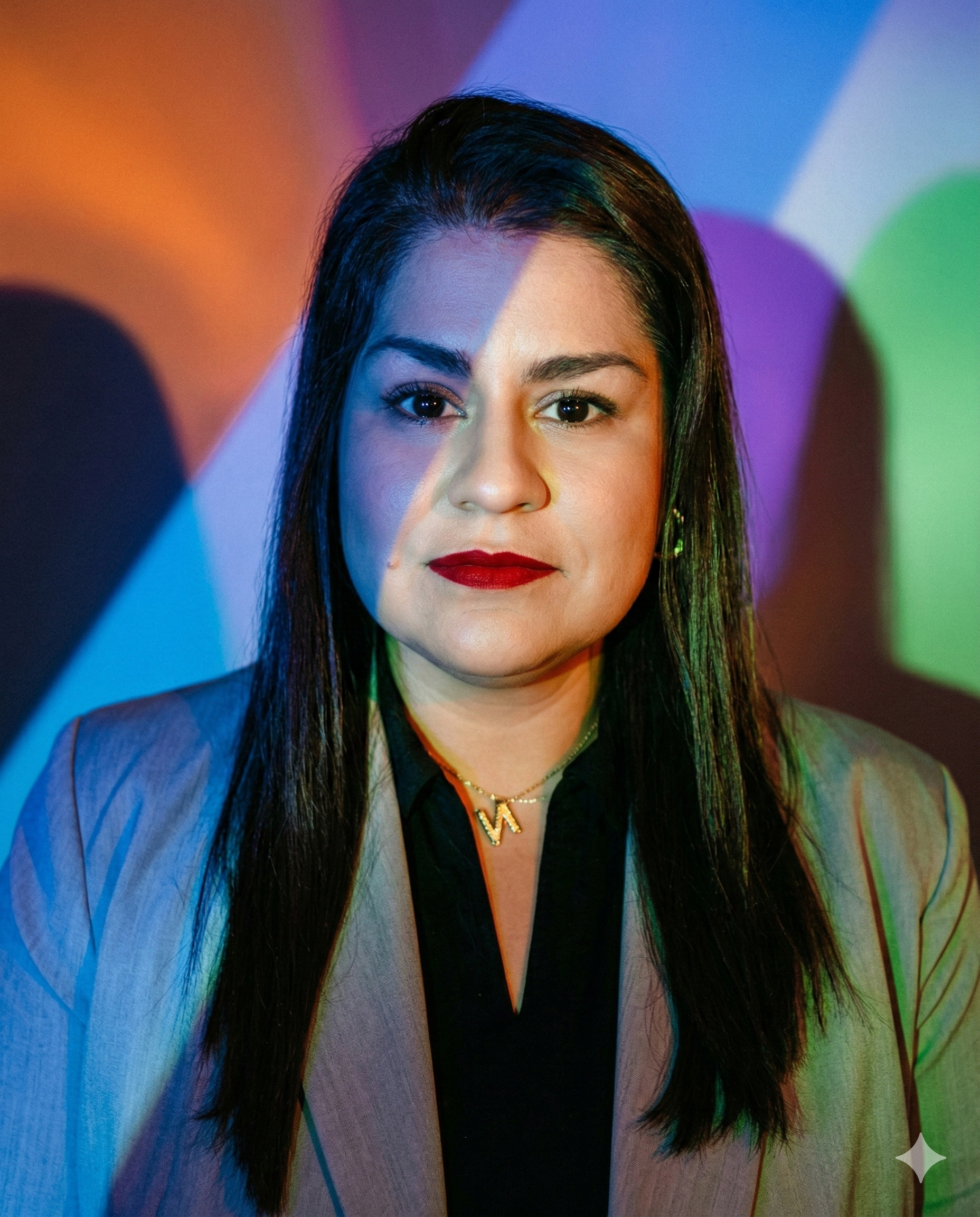
AI Strategist
Nardeep Singh is a marketing technology executive with 12+ years leading AI implementation and digital strategy in healthcare. She is the founder of Elevated Strategy and creator of AI Nuggetz, a growing community of marketing and technology professionals learning to apply AI. She holds an M.S. in Information Technology Management.